February 12th, 2020

Did you know the actions leading to the beginnings of Valentine's Day were actually centered on the avoidance of war? A Catholic priest named Valentine defied the orders of the Emperor Claudius II and secretly married young men and their brides after the emperor had declared it illegal because only single, young men could be sent to war. Rather than lose potential soldiers to fight his war, Claudius attempted to hoard them by proclaiming marriage illegal.
Valentine continued to marry young couples anyway and, eventually, was put to death for it in 270 AD. Before his death, he sent a letter to a secret love and signed it “From your Valentine”. Nearly 1,800 years later, people are still signing letters and cards in this manner. This year, carry on the tradition started long ago, while adding your own twist. Here are a few suggestions.
Simple and Creative Valentine's Day Ideas
- Memorialize it with a Photo. Couples often have photos taken around Christmas, but Valentine's Day photos allow you to capitalize on romance. Famous couple Julia Child and her husband, Paul, had their picture taken together every Valentine's Day and included their sense of humor with silly props.
- Return to Your First Date Location. Even if your first date together was at a local hotdog stand, its sentimental value can make it a fun part of your Valentine's Day agenda. Be creative and make a treasure hunt with clues that lead your partner to the original date location, where you can express your love with flowers or a gift.
- “From Your Valentine” Messages. Deliver your message in a creative way to make this Valentine's Day stand out from the others. Bake your partner's favorite treat and write a message on it with a tube of icing, or draw a note on the steamed up mirror so it shows up when your partner takes a shower.
Although Valentine's Day is a day to celebrate love, it doesn't have to be a special day only for couples. If you're single, use this special day to shower yourself with love, because you're worth it! After all, the priest Valentine believed so strongly in the sanctity of love that he was willing to risk his life for it. Whether you're in a relationship or single, young or old, romantic or not, Valentine's Day is for you. Happy Valentine’s Day from the Pediatric Dentistry office of David Jones.
February 5th, 2020

February is National Children’s Dental Health Month, and a perfect time for David Jones to review some of the important steps in keeping your child’s smile healthy!
Your Baby
Early care is best! Even before teeth appear, the American Dental Association recommends gently wiping your baby’s gums with a clean, moist gauze pad or washcloth after feeding. When his or her first tooth arrives, it’s time to schedule your child’s first visit. Our office will be happy to answer any questions you might have about brushing tools and techniques. This is also an opportunity to check not only tooth health, but jaw and teeth development. Check your baby’s teeth regularly, and call us if you have any concerns.
Your Preschooler
By the time children are three, they will probably have all or most of their baby teeth. Brushing your child’s teeth twice a day with a soft-bristled, child-sized brush is a great model for when your child begins brushing on his or her own. And when teeth begin to touch, flossing your child’s teeth is recommended once a day as well. Remember to schedule regular checkups at our Naperville, Illinois office, and help make your toddler’s visit positive by reading books or watching videos about visiting the dentist, using playtime to practice things that might happen in the dentist’s chair (such as opening his or her mouth to count teeth), and planning visits during times your child is well-rested.
Your School-Age Child
Your child might be ready to take on brushing and flossing while you supervise, and there are many ways you can encourage both reluctant and enthusiastic brushers! The ADA recommends two minutes of careful brushing twice a day, or as directed by your dentist or physician. You can use these four important minutes to tell your child stories, listen to music, or brush together. Your child can help choose his or her toothbrush and toothpaste, or earn stickers for a brushing job well done. Stick to a routine for best results, and schedule regular checkups and cleanings to protect your child’s overall dental health. This is also an important age to check bite alignment, any potential orthodontic issues, and the possibility of sealants.
February might be the shortest month, but it’s a great time to consider your child’s life-long smile. If you have any questions or concerns, the team at our Naperville, Illinois office is always happy to discuss them with you—any time of year!
January 29th, 2020
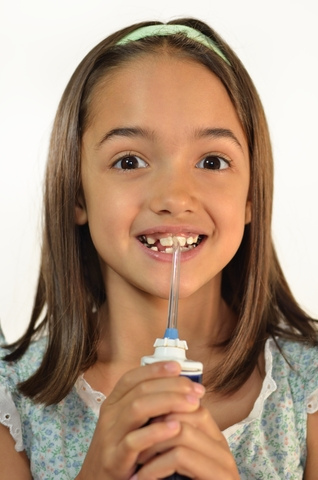
Water picks, sometimes called “oral irrigators,” make an excellent addition to your regular home care regimen of brushing and flossing. Especially helpful to those who suffer from periodontal disease and those patients of ours undergoing orthodontic treatment with full-bracketed braces, water picks use powerful tiny bursts of water to dislodge food scraps, bacteria, and other debris nestled in the crevices of your mouth. Children undergoing orthodontic treatment may find using a water pick is beneficial if their toothbrush bristles tend to get caught on their wires or brackets.
When you use a water pick, you’re not only dislodging any particles or debris and bacteria you might have missed when brushing, you are also gently massaging the gums, which helps promote blood flow in the gums and keeps them healthy. While water picks are an excellent addition to your daily fight against gingivitis and other periodontal diseases, they are incapable of fully removing plaque, which is why David Jones and our team at Small Smiles LLC want to remind you to keep brushing and flossing every day.
If you have sensitive teeth or gums and find it uncomfortable to floss daily, water picks are a good alternative to reduce discomfort while effectively cleaning between teeth. Diabetics sometimes prefer water picks to flossing because they don't cause bleeding of the gums, which can be a problem with floss. If you have a permanent bridge, crowns, or other dental restoration, you may find that a water pick helps you keep the area around the restorations clean.
So how do you choose the right water pick?
Water picks are available for home or portable use. The home versions tend to be larger and use standard electrical outlets, while portable models use batteries. Aside from the size difference, they work in the same manner, both using pulsating water streams. A more crucial difference between water picks is the ability to adjust the pressure. Most home models will let you choose from several pressure settings, depending on how sensitive your teeth and gums are. Most portable models have only one pressure setting. If you want to use mouthwash or a dental rinse in your water pick, check the label first; some models suggest using water only.
Please give us a call at our Naperville, Illinois office if you have any questions about water picks, or ask David Jones during your next visit!
January 22nd, 2020

Children are born with a set of primary teeth – 20 to be exact – that help them learn to chew and speak, and develop enough space in the jaw for the permanent teeth that will appear several years later. Kids are especially susceptible to decay, which can cause pain and tooth loss – a problem that could interfere with oral development. As a parent, it is important that you take proactive steps to keep your child’s teeth as healthy as possible.
Bottles and “Sippie Cups”
One of the biggest culprits of childhood tooth decay is poor diet. This begins as early as a few months old, when children are often allowed to go to bed with bottles and “sippie cups” of milk or juice. The sugars in these beverages – even natural sugars – can steadily decay the teeth.
David Jones and our staff suggest serving children milk and juice only at meal times, and limiting juice intake to just a few ounces per day. If your child becomes thirsty between meals or likes to go to bed with a bottle, serve water during these times.
Hygiene
As a parent, you can establish healthy dental habits long before your child’s first tooth erupts. Start by gently wiping your baby’s gums with a clean wash cloth during the first months of life. By age one, graduate to an appropriately sized toothbrush with fluoridated toothpaste, and brush at least twice a day.
Dental Visits
Dental visits should start young and continue on a regular basis throughout your child's life. David Jones and our staff recommend parents bring their children to Small Smiles LLC for the first time no later than the child’s first birthday. Initial visits concentrate on parental education, while later visits may include thorough cleanings and fluoride treatments as your child grows.
For more information about keeping your child’s teeth cavity-free, contact our Naperville, Illinois office to schedule a dental consultation and checkup.






 Website Powered by Sesame 24-7™